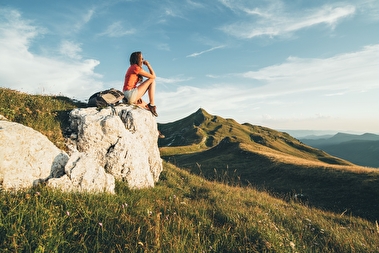
The Jura Mountains are simply fascinating! From the mysteries of their geological formation to the magnetic pull of their highest peaks, through their unique landscapes, their location straddling France and Switzerland, and their protected natural areas — this mountain range will soon reveal all its secrets to you!
LOCATE
A. Fleury / BFC Tourisme
Cross-border territory
The Jura Mountains on the Map
The Jura Mountains lie in eastern France, along the Swiss border.
This destination stretches across three departments — Doubs, Jura, and Ain (not just the administrative Jura department) — and two regions: Bourgogne–Franche-Comté and Auvergne–Rhône-Alpes. It begins in Montbéliard, in the Doubs to the north, and extends all the way to the foothills of Lyon, in the Bugey area near Bourg-en-Bresse, passing through the Jura along the way.
The mountain range forms 230 kilometers of natural border between the French and Swiss Jura — a remarkably consistent mid-mountain landscape. On either side of this invisible Franco-Swiss line? The same forests, the same meadows, and a shared culture and craftsmanship born from centuries of exchange.
Just 3 hours from Paris by high-speed train, 4 hours from Strasbourg, and close to Geneva Airport, the Jura Mountains are an easily accessible destination for anyone seeking nature and rejuvenation.
Enjoy two countries for the price of one as you explore this cross-border region! Watchmaking, absinthe, cheese-making… you’ll see that the French and the Swiss share many traditions — while proudly preserving their own distinct identities.
A geological story millions of years in the making
To truly understand the Jura Mountains — their unique features, their relief, and their landscapes — we must travel far back in time, to the realm of geological history. This fascinating story began around 200 million years ago and has been shaped by several major geological processes, including:
The pressure of tectonic forces triggered by the formation of the Alps. It was this immense Alpine push that sculpted the Jura Mountains into the contours we recognize today.
The ice ages, whose melting glaciers gave birth to some of the Jura’s lakes and most of its peat bogs.
Water, which has been shaping the massif for thousands of years. It seeps through the limestone rocks, disappearing underground before reemerging as springs. Over time, water has carved the rock to create gorges, reculées (steep, blind valleys), and other striking landscapes.
The Jura Mountains offer an extraordinary diversity of landscapes — the result of their complex geology and rich natural history:
Agence Hula Hoop / BFC Tourisme
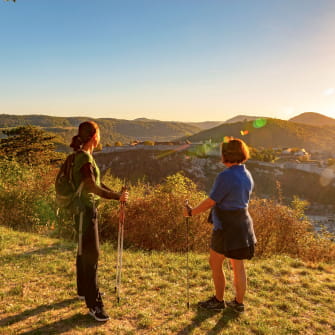
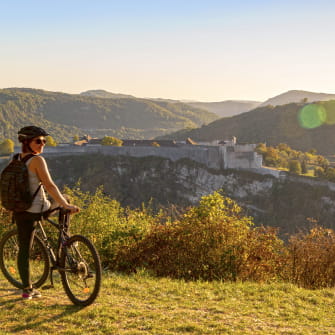
Ridges and peaks: breathtaking panoramas
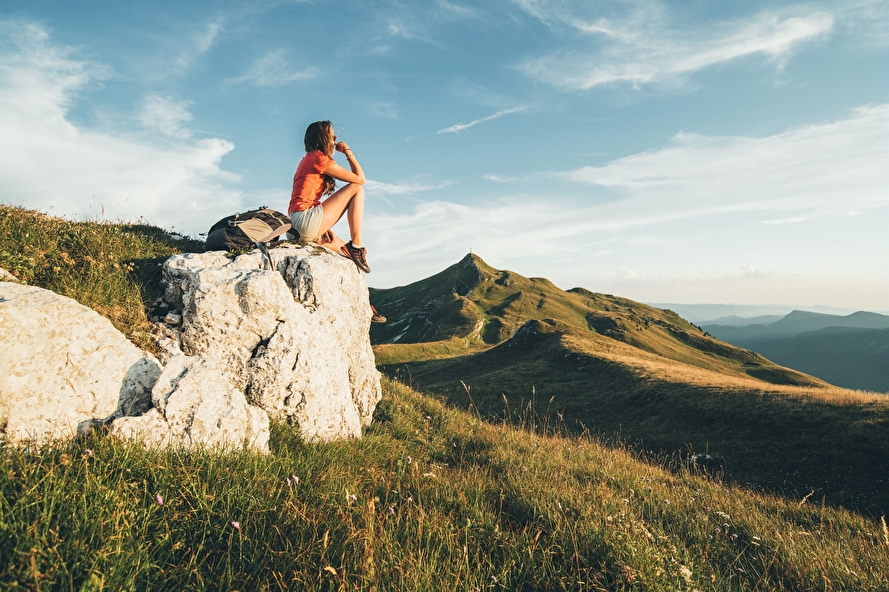
The Jura ridges, especially those of the Haut-Jura, provide sweeping views over the surrounding valleys and, on clear days, all the way to the Alps.
These areas are a paradise for hikers and anyone who loves wide-open, awe-inspiring scenery.
Marika Godin / BFC Tourisme
Lakes and waterfalls
On the plateaus, the impermeable geological layers left behind by the last ice ages have helped retain water, forming magnificent natural lakes.
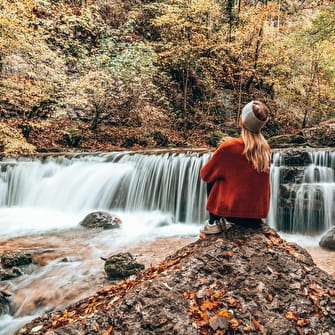
Where water meets limestone, the landscape is sculpted — carving underground networks and reemerging dramatically as waterfalls and springs.
my destination / BFC Tourisme
The Jura plateaus
They stretch over vast areas, featuring open landscapes dotted with forests and meadows, where the beloved Montbéliarde cows graze — their milk is used to produce the famous Comté cheese.
Reculées, such as the one at Baume-les-Messieurs, are deep valleys that end in a dead end, flanked by impressive limestone cliffs. These spectacular geological formations often shelter waterfalls and caves.
Mizenboite Production / BFC TourismeBalade VTT dans les vignes du hameau de Gravelles
The vineyards of Jura and Bugey
Small in size but remarkable in diversity, the Jura vineyard stretches over 80 kilometers along the Revermont.
The Jura Mountains also include the Bugey vineyard, located in the south of the Ain department.
Marika Godin / BFC Tourisme
Dense forests: havens of biodiversity
Forests are everywhere in the Jura Mountains, dominated by coniferous trees.
These forests have long supported an economy ranging from industrial sawmills to small artisanal workshops, continuing an ancestral tradition of woodworking to create all kinds of objects: toys, pipes, boxes…
Elisa et Max - Bestjobers
Human-scale towns
Besançon, Dole, Morteau, Bourg-en-Bresse, Arbois… all towns of a manageable size where nature is never far away.
In the Jura Mountains, it’s simple: you can walk the streets in the morning and find yourself immersed in nature by the afternoon.
Marika Godin / BFC Tourisme
Wetlands: peat bogs and marshes
The Jura Mountains are home to numerous wetlands, including peat bogs and marshes, recognized for their ecological importance.
These fragile habitats provide refuge for unique flora and fauna. Six peat bogs have been equipped with trails, allowing visitors to explore them without damaging these sensitive environments.
EXPLORE
Gentle peaks
Mountains naturally bring peaks, and the highest ones in the Jura are found in the southwest, in the Ain department, where the so-called Haute Chaîne du Jura unfolds — a rugged, dramatic landscape under strict protection as a national nature reserve.
The top peaks include:
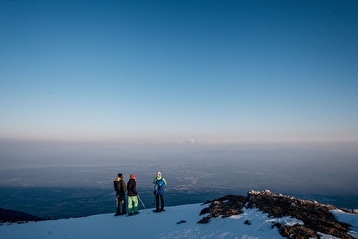
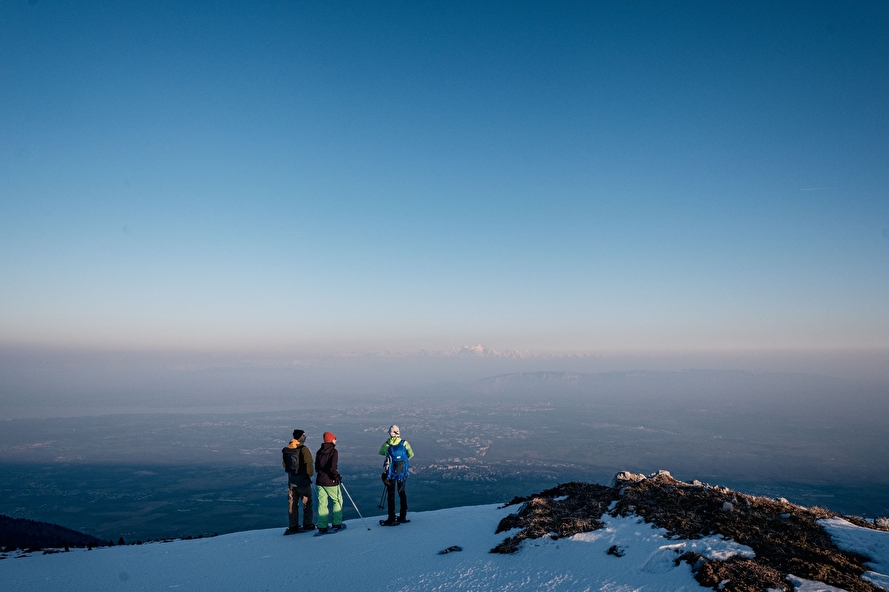
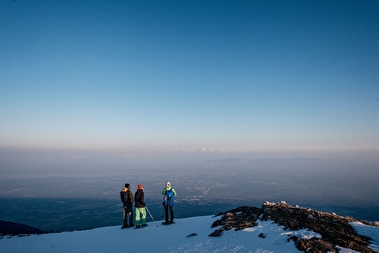
Crêt de la Neige: 1,720 m – the highest summit of the Jura Mountains, offering stunning views of Geneva, Lake Geneva, and the Alps.
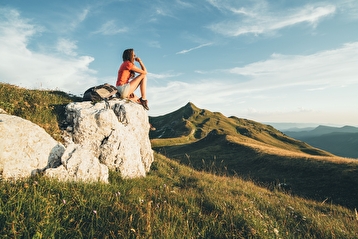
Le Reculet: 1,718 m – the second-highest peak. Hiking enthusiasts often take the trail connecting the two tallest peaks, a 10 km route with 958 m of elevation gain, taking roughly 5.5 hours.
Colomby de Gex: 1,688 m
Mont Tendre (Swiss side, Vaud canton): 1,679 m
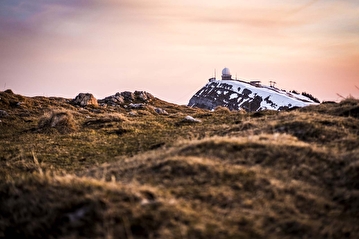
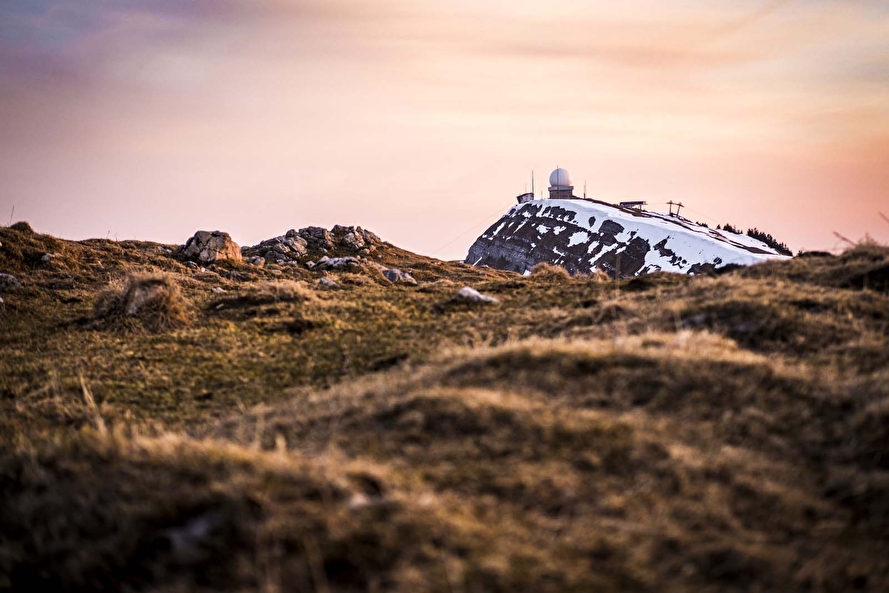
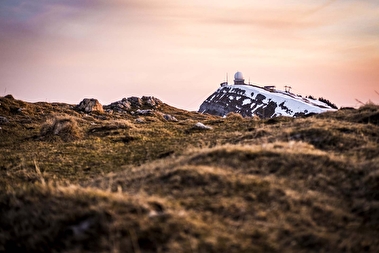
Le sommet de la Dôle: 1,677 m – topped with a large white dome housing an air traffic radar and a meteorological station.
Mont d’Or: 1,463 m – overlooking the village of Métabief in France and the small town of Vallorbe in Switzerland, famous for its spectacular 250 m high limestone cliff.
All these peaks are accessible on foot, offering rewarding hikes of varying difficulty, often with the Alps — and its star, Mont Blanc — as a breathtaking backdrop.
Le sommet de la Dôle dans le JuraBenjamin Becker - BFC Tourisme
Agence Hula Hoop / BFC Tourisme
Le Crêt de la Neige en raquettesAgence Hula Hoop / BFC Tourisme
Agence Hula Hoop / BFC Tourisme
Sommet du Reculet dans l'AinAgence Hula Hoop / BFC Tourisme
Le sommet de la Dôle dans le JuraBenjamin Becker - BFC Tourisme
Le Crêt de la Neige en raquettesAgence Hula Hoop / BFC Tourisme
Sommet du Reculet dans l'AinAgence Hula Hoop / BFC Tourisme
PROTECT
The Jura Mountains form a vast Franco‑Swiss protected area. They are home to two regional natural parks, as well as nature reserves and other sensitive zones. Wetlands in particular are closely monitored under the Ramsar Convention, which works to ensure their conservation. In total, 125 peat bogs and 18 natural lakes benefit from specific protection measures.
Forests, meadows, lakes… all these natural habitats provide refuge for remarkable flora and fauna. Notable species include the lynx and the capercaillie among animals, and rare and remarkable wild orchids among plants.
It is up to us to approach this fragile nature gently. It is up to us to preserve the environment during hikes, bike rides, or ski trips. It is up to us to share these spaces responsibly, leaving no trace, so that this enchanting nature can be enjoyed today and tomorrow.
The highest point of the Jura Mountains is Crêt de la Neige, reaching 1,720 meters (5,643 feet) in elevation. It is located in the Ain department, within the Haute Chaîne du Jura National Nature Reserve, very close to the Swiss border.
This peak offers spectacular views over the Lake Geneva basin and, on clear days, all the way to Mont Blanc.
Several hiking routes lead to the summit, including trails from Lélex or Thoiry.
Crêt de la Neige is part of the southern Jura chain, which is steeper and more rugged than the northern plateaus.
What is the temperature like in the Jura Mountains in summer?
Pierre Witt | BFC Tourisme
In summer, temperatures in the Jura Mountains are generally mild and remain cooler than in the lowlands, making it a pleasant destination, especially during heatwaves.
At higher altitudes (above 900 m), temperatures can vary widely but are always cooler than in the plains.
At night, they can drop to between 10 and 15 °C (50–59 °F), or even lower at the highest points.
It’s the perfect climate for a cool summer holiday and for hiking without suffering from the heat.
Are there ski resorts in the Jura Mountains?
Nicolas Gascard / BFC Tourisme
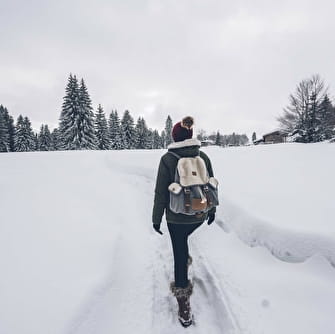
Yes, there are several ski resorts in the Jura Mountains, known for their friendly atmosphere and offering both alpine skiing and a variety of Nordic activities, including cross-country skiing, snowshoeing, and dog sledding.
Three resorts to discover:
Métabief: Overlooked by Mont d’Or, Métabief station reaches 1,463 m (4,800 ft) in altitude. Spacious and airy, it offers exceptional panoramic views of nearly 300 Alpine peaks.
Les Rousses: Les Rousses combines four villages into a welcoming, family-friendly ski resort. Its mountains straddling France and Switzerland, snow-covered valleys and plateaus, and panoramic ridges provide a diverse and high-quality alpine and Nordic experience.
Monts Jura: Facing one of the most spectacular panoramas in Europe, this resort, with a summit at 1,680 m (5,512 ft), allows visitors to enjoy all kinds of snow sports just 20 minutes from Geneva.
All three resorts are inhabited year-round and remain lively no matter the season.
The Jura Mountains are full of delicious specialties that reflect their mountain terroir and culinary expertise. Among the highlights are:
Cheeses: iconic varieties such as Comté, the king of Jura; Morbier, recognizable by its black central line; creamy, veined Bleu de Gex; and Mont d’Or, enjoyed either cold or warm.
Wines: typical Jura and Bugey wines, including Vin Jaune made from the Savagnin grape, as well as Vin de Paille and Macvin.
Traditional dishes: specialties like Jura fondue, croûte aux morilles (morel mushroom crust), and chicken in Vin Jaune, all prepared with local products that are a source of regional pride.
Unexpected drinks: absinthe, gentian (a type of fruit brandy), and fir liqueur.
The word “Jura” comes from the Latin juria, which itself derives from the Celtic word Jor, meaning “wooded height.” The name has endured through the centuries to refer not only to the mountain range, but also to the French department, the Swiss canton… and even the Jurassic geological era (from 200 to 145 million years ago), which coincides with the reign of the dinosaurs on Earth. It’s no wonder Steven Spielberg borrowed the term for his famous Jurassic Park saga.
Where can you swim in the Jura Mountains?
Ain Tourisme - BFC TourismeBaignade en famille - Lac de Nantua
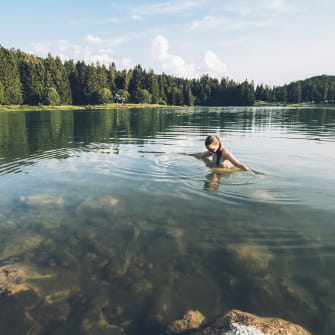
Dozens of lakes are open for swimming, strolling, or simply enjoying the view! Highlights include: Lac de Vouglans: the third-largest artificial lake in France. Lac Saint-Point: a vast natural lake popular for swimming, sailing, and paddleboarding. Lac des Rousses: a high-altitude lake that is very pleasant in summer, with a designated beach area. On the Swiss side, natural lakes such as Lac de Joux are also available for swimming.
Vingt Dieux, Le Roman de Jim, Polar Park, Les Misérables… so many films and series that make French cinema proud were filmed — entirely or in part — in the Jura Mountains!
With their breathtaking landscapes, rich heritage, and unique identity, the Jura Mountains have, over the decades, established themselves as an unmissable location for national cinema.